Visit the museum
Discover living mollusks, shell collections and educational resources.
Explore the museumMarine biodiversity · Education · Discovery
Every shell tells a story. From the beaches of Southwest Florida to the biology classroom, I love helping people discover the animals, adaptations and science behind these extraordinary structures.
Explore shells in 3DBeach field notes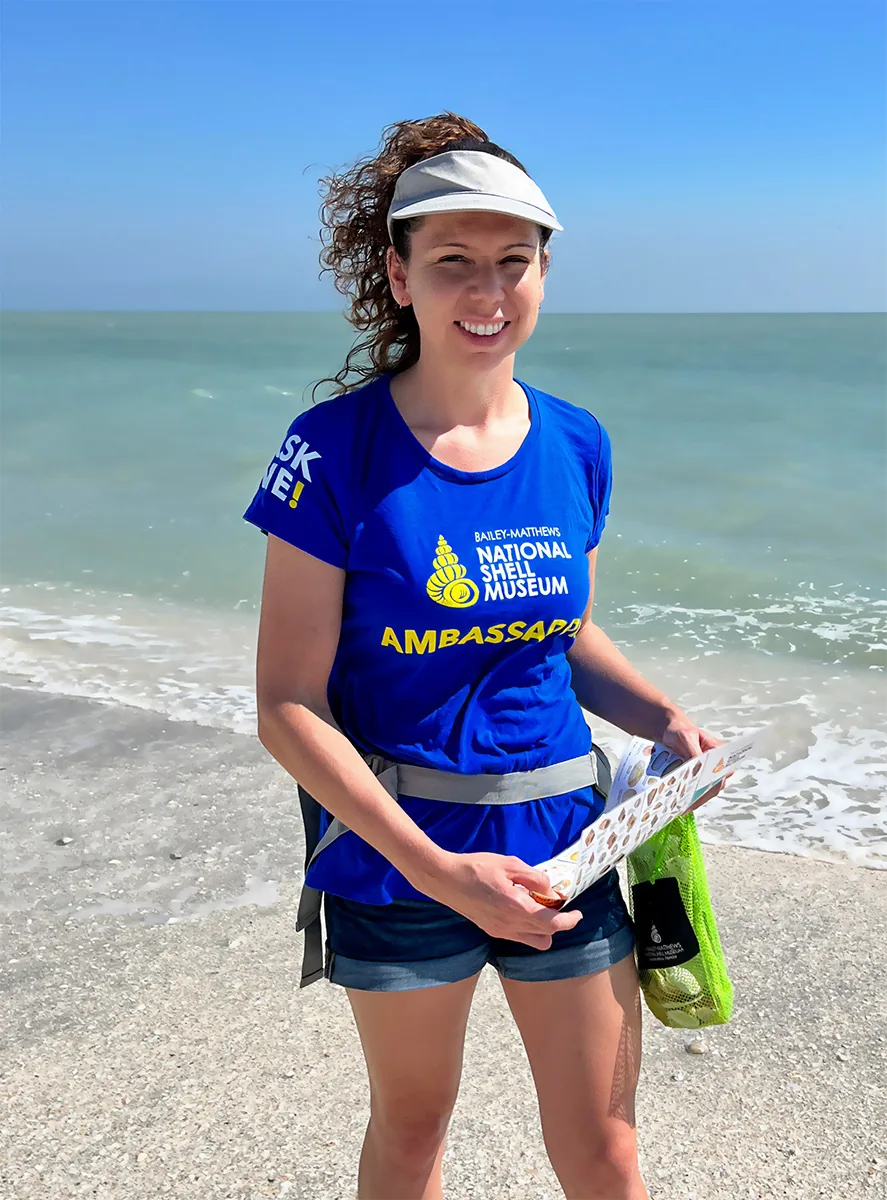
A remarkable local resource
As a Shell Ambassador for the Bailey-Matthews National Shell Museum & Aquarium, I enjoy connecting beachgoers with the living animals behind the shells they encounter. Sanibel is often called the Seashell Capital of the World, and we are fortunate to have a museum dedicated to mollusks and their ecosystems right here in Southwest Florida.
Discover living mollusks, shell collections and educational resources.
Explore the museumLearn to recognize shells using the museum's identification resources.
Explore the shell guideObserve living animals without disturbing them, leave occupied shells in place and check local collection rules.
Sanibel shelling guidanceResearch collaboration · FSW × Shell Museum
Dr. Sauer at Florida SouthWestern State College, José H. Leal at the Bailey-Matthews National Shell Museum & Aquarium, and FSW student research assistants connect shell collections with digital imaging and research through photogrammetry. Overlapping photographs are processed into interactive three-dimensional models that can be examined from multiple angles.
Explore this example of Forreria belcheri, credited to the FSW STEM collection. Digital specimens offer opportunities to investigate morphology, compare structures and develop quantitative research questions. Measurements require appropriate calibration and validation.
Explore shell modelsMore 3D explorationDigital malacology · Exploratory research
Explore comparative horse conch morphology through interactive 3D specimens and a coordinate-based landmark alignment workspace. This prototype introduces quantitative shape comparison and outlines a pathway toward validated surface registration and species-level research.
Open the Shell Research LabScience in the classroom
I incorporate shell identification into biology classification laboratory activities, connecting the terminology students learn with real biological diversity. Shell shape, symmetry, sculpture, aperture and hinge features provide observable evidence for comparing molluscan groups and practicing identification.
Describe the specimen before naming it.
Use distinguishing morphological features to compare gastropods and bivalves.
Use identification resources, explain the evidence and acknowledge uncertainty.
The Curious Life · Coastal field journal
This is where I plan to share beach discoveries, shell identification observations, photographs and questions inspired by the natural world. Future entries can include the date, general beach location, identification evidence and ecological context.
Read the field journalKeep in touchThis personal website highlights educational and research connections. FSW and museum models are credited to their creators; this page is not an official institutional website.
Source addresses are provided for reference. Continue exploring this site using the navigation above.